
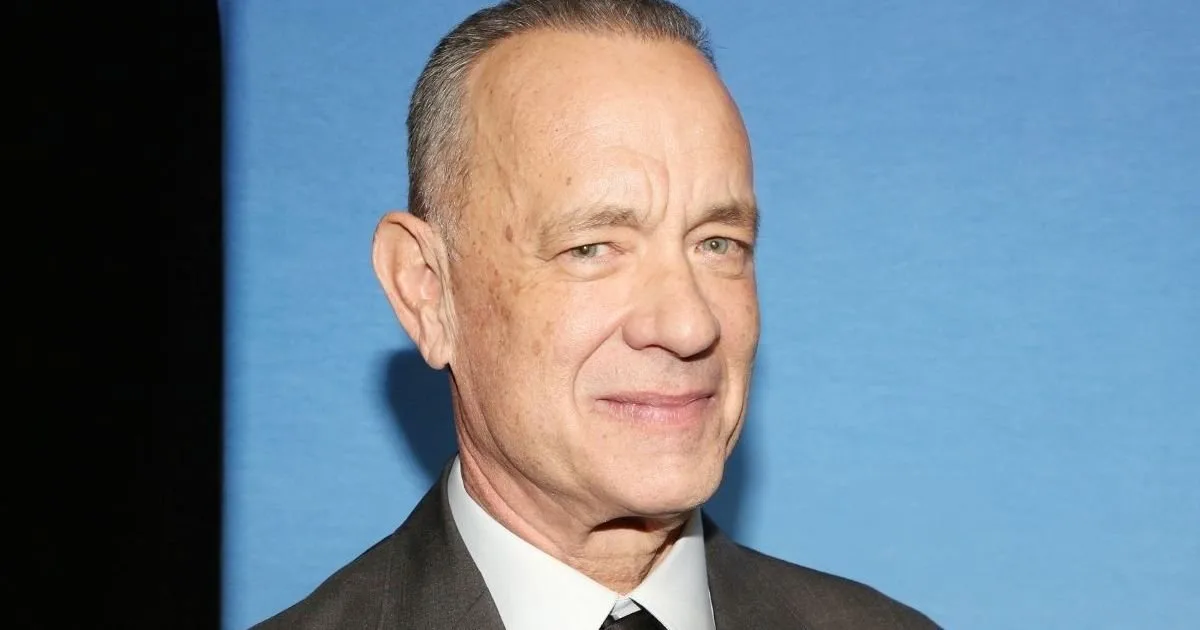
The Tom Hanks Artemis II tribute landed hours after liftoff on April 1, 2026, when the actor posted on Instagram to cheer the four astronauts flying around the Moon. Hanks, 69, is the star of Apollo 13, the 1995 film about NASA’s near-disastrous 1970 lunar mission, so his voice carried a particular weight on the day humans finally travelled beyond low Earth orbit again. Artemis II launched from Kennedy Space Center in Florida at 6:35 p.m. EDT on April 1, and Hanks named each member of the crew in turn.
What did Tom Hanks post?
Hanks wrote, “Did you know that no humans have traveled beyond the gravitational pull of the Earth since December 1972? That changes today, when the crew of Artemis lifts off from the Cape… Reid Wiseman. Victor Glover. Jeremy Hansen. Christina Koch. On a voyage around the Moon. Godspeed, Artemis… And thank you.” Entertainment Weekly reported the post on April 2, 2026, quoting the same words. The post was a two-image carousel: one slide carried the text of his message, and the other was a photo of Hanks with the astronauts.
The original version of this post garbled the crew’s names, spelling the commander “Reed” in one place and “Weisman” in another. His name is Reid Wiseman. It also quoted invented engagement figures for the post, with likes, shares and retweets that do not match how Instagram works. Those numbers have been removed, because no reliable count was available in the sources checked.
What is Artemis II?
Artemis II is NASA’s first crewed mission beyond low Earth orbit since Apollo 17 in December 1972, a gap of more than 53 years. The mission sent four astronauts around the Moon and back in the Orion spacecraft, named Orion CM-003 Integrity, launched on NASA’s Space Launch System rocket from Launch Pad 39B at Kennedy Space Center. The flight lasted about 10 days on a free-return trajectory, meaning the spacecraft looped around the Moon and came home without entering lunar orbit.
The mission splashed down at 8:07 p.m. Pacific time on April 10, 2026, in the Pacific Ocean off the coast of San Diego, and the crew returned to Johnson Space Center in Houston the next day, reuniting with their families. NASA described it as the first crewed test flight of the Artemis programme, designed to test the Orion spacecraft, navigation, communications and life-support systems before a future landing attempt. It was not a landing mission, and nobody set foot on the Moon.
Who are the four astronauts?
The crew is made up of commander Reid Wiseman, pilot Victor Glover, and mission specialists Christina Koch and Jeremy Hansen. Three are NASA astronauts and one, Hansen, is with the Canadian Space Agency. Glover is the first Black person, Koch is the first woman, and Hansen is the first Canadian to take part in a mission of this kind. Wiseman, from Baltimore, was selected as a NASA astronaut in 2009 and spent 165 days on the International Space Station in 2014. Glover, from Pomona, California, previously piloted NASA’s SpaceX Crew-1 mission.
The mission was expected to take the crew farther from Earth than any humans have ever travelled, passing the distance record set by the Apollo 13 crew in 1970. That detail connects directly to Hanks, because Apollo 13’s crew flew farther from Earth than anyone before or since, while looping around the Moon after an oxygen tank explosion forced them to abandon their landing.
Why does Apollo 13 make Hanks the obvious cheerleader?
Hanks starred as Apollo 13 commander Jim Lovell in the 1995 film Apollo 13, which told the story of the 1970 mission. The original version of this post wrongly said Hanks directed the film. He did not. Ron Howard directed it, and Hanks played Lovell. The film was a critical and commercial success, and it fixed Hanks in the public mind as the face of NASA’s most famous rescue.
Hanks has stayed close to the space programme since. He recently co-wrote and narrated The Moonwalkers: A Journey with Tom Hanks, a film about NASA’s lunar voyages that features interviews with the Artemis II astronauts. His Instagram post was in character: a short history lesson, the names of the crew, and a plain wish for their safe return. He signed it simply, “THanks”.
Hanks remains one of the most respected film actors of his generation, and his public statements about space carry weight because of that long association. Ryan Gosling has said fans are not responsible for saving movie theatres, and the Oscars 2026 saw Paul Mescal and Dwayne Johnson become the biggest snubs. Awards-season comedy travels just as widely: Ryan Gosling broke character over a Barbie joke in an SNL sketch.
How the mission unfolded
| Date | What happened | Source |
|---|---|---|
| December 1972 | Apollo 17, the last crewed mission beyond low Earth orbit, returns to Earth | NASA |
| April 1, 2026 | Artemis II lifts off from Kennedy Space Center at 6:35 p.m. EDT; Hanks posts his tribute | NASA |
| April 10, 2026 | Orion splashes down in the Pacific Ocean off San Diego at 8:07 p.m. Pacific time | NASA |
| April 11, 2026 | The crew returns to Johnson Space Center in Houston and reunites with families | NASA |
Frequently asked questions
Did Artemis II land on the Moon?
No. It was a flyby mission. The crew looped around the Moon on a free-return trajectory and came home without landing.
How long did Artemis II last?
About 10 days, from liftoff on April 1, 2026 to splashdown on April 10, 2026.
Did Tom Hanks direct Apollo 13?
No. Ron Howard directed Apollo 13 in 1995. Hanks starred in it as commander Jim Lovell.
Entertainment Weekly reported Hanks celebrating the Artemis II launch, and NASA confirmed the crew’s return to Houston after the lunar flyby.