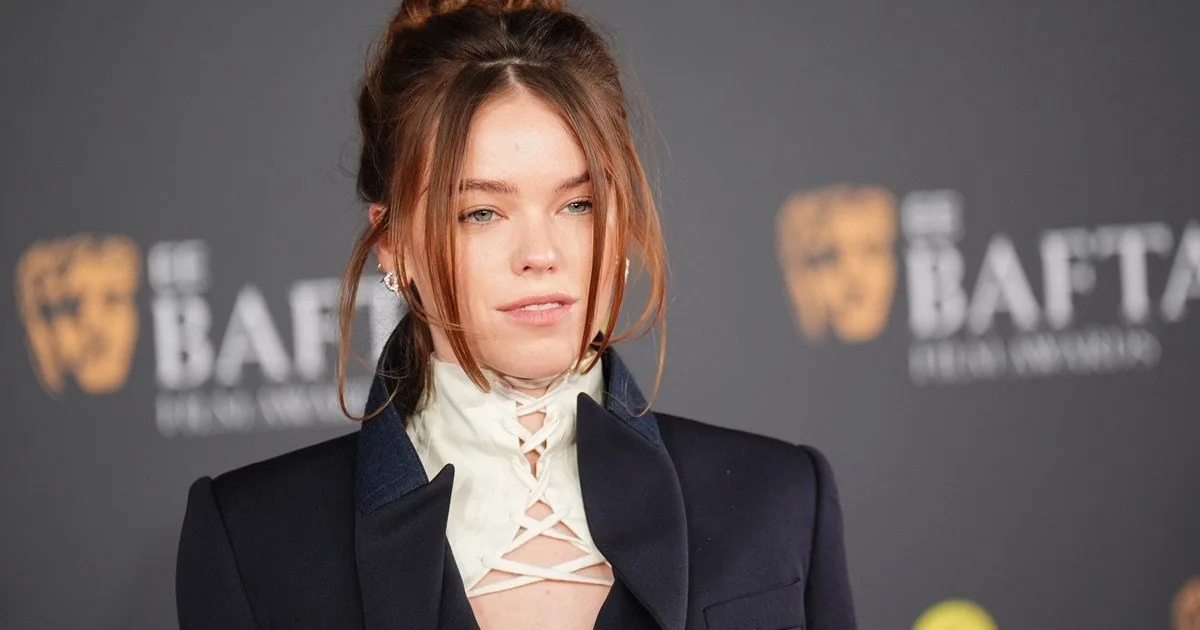
The Milly Alcock Supergirl backlash conversation started months before the film came out, when the Australian actor told Vanity Fair that she already knew criticism was coming and had made her peace with it. “I know I’m going to get comments. But I can’t really stop them. I can just be me,” Alcock said in the interview, published in March 2026. She described recurring dreams of standing at the bottom of a tsunami as the pressure built around the role, and she was frank about the fear underneath the confidence: “Of course I’m scared. Of course I want people to like me and the movie. But ultimately, it’s out of my control.”
Alcock, 26, plays Kara Zor-El, Superman’s cousin, in Supergirl, the second film in James Gunn’s DC Studios universe. She was cast after her breakout as the young Rhaenyra Targaryen in House of the Dragon, and the Vanity Fair interview was her first long conversation about what it means to step into a role that comes with a built-in audience and a built-in argument about who should play it.
What did Milly Alcock say about the reaction to Supergirl?
Her core point was that the reaction was never really about her performance. Asked whether the famously fickle Game of Thrones fandom had prepared her for the inevitable backlash, she said her time on House of the Dragon had taught her something specific. “It definitely made me aware that simply existing as a woman in that space is something that people comment on,” she told Vanity Fair. “We have become very comfortable having this weird ownership of women’s bodies. I can’t really stop them. I can only be myself.”
She returned to the same idea when describing the experience of becoming the face of a franchise. “It’s been kind of disorientating,” she said. “I do this job because it gives me the ability to disappear. So then to suddenly be so visible and so exposed is a very vulnerable experience. I’m just trying to learn how to deal with that relationship. But I mean, it’s exciting. Of course it’s exciting. But like anything exciting, it’s also terrifying.” The tsunami dream she described, standing at the foot of a wave she cannot stop, is the image that holds the whole interview together.
What did House of the Dragon teach her?
It taught her that scrutiny in genre fandom is not really about acting. Alcock left Australia in 2021 to film House of the Dragon in Britain, playing the young version of Rhaenyra Targaryen, and the experience showed her how quickly commentary on a woman in a franchise moves from the character to the body. That is the context for her Vanity Fair line about ownership of women’s bodies: she is not describing a single incident, but a pattern she watched play out across a whole fandom.
She also addressed the directors who have criticised the superhero genre, including Martin Scorsese, with a shrug rather than a rebuttal. “Whenever there is a new wave, there will be criticism,” she said. “Not every film is for everyone. The beauty of art is that you can be selective about your tastes.” It is a notably ungenerous-free response: she does not argue that superhero films are high art, and she does not argue that their critics are wrong. She argues that audiences can choose, which is a harder position to attack than a defence would have been.
What else did Milly Alcock share in the Vanity Fair interview?
She talked about the long road to the role, and it was not a smooth one. At 13 she was passed over by talent agencies, and she said her family struggled financially, which pushed her to be vocal about what she wanted. Her mother became her model for that. “My mother instilled in me this blind belief: ‘If those idiots can do it, why can’t you?'” Alcock said. “That lit a fire under my ass.”
She also talked about the fear that followed her last big job. After the Netflix limited series Sirens, she did not work for a year, and she told Vanity Fair, “I was so shit-scared that my life was over at 22.” That is a striking admission from an actor who was, by any outside measure, on a steep upward curve. She also said she had not spoken to the previous actors who played Supergirl, Melissa Benoist and Sasha Calle, explaining, “They’re just people living their lives. It’s not like we have this blood bond.” She is building her own version of the character, and she was not interested in turning other women into unpaid mentors.
How did Supergirl do when it arrived?
Supergirl was released in cinemas on June 26, 2026, after a world premiere in New York City on June 22, 2026, and it opened below expectations. Pre-release tracking had already looked weak, and Fox News reported that the opening weekend implied the film could fall well short of $100 million, with later tracking suggesting a loss of as much as $200 million. The New York Times, meanwhile, blamed misogyny and fan hostility for the poor opening, a reading that echoed Alcock’s own pre-release comments about the reaction she expected.
Alcock did not walk her Vanity Fair remarks back after the release. In a follow-up interview with Variety, she doubled down on the line that had drawn the most attention. “I didn’t even say ‘men’, I said ‘people!'” she said. “And they got so angry. I was like, ‘You’re proving my point. You’re proving my point!'” She also answered a question about whether she had explored her character’s supposed queerness in preparing for the role by saying the film “is not centered around a man, it’s not centered around love at all,” and adding, “She probably goes both ways.” That answer drew its own round of criticism, and Alcock’s response to the criticism was, in effect, the same as her response to the backlash she predicted in March: she can only be herself.
Who is Milly Alcock?
Milly Alcock, born Amelia Alcock on April 11, 2000 in Sydney, Australia, broke out as the young Rhaenyra Targaryen in HBO’s House of the Dragon, then starred in the Netflix limited series Sirens before being cast as Kara Zor-El in Supergirl. She turned 26 in April 2026, weeks after the Vanity Fair interview was published. In June 2026 she appeared as Vogue Australia’s cover star, a moment covered in Milly Alcock’s Vogue Australia June 2026 cover. The Supergirl role sits in the DC Studios universe alongside the 2025 Superman film, in which Nicholas Hoult played Lex Luthor, covered in Nicholas Hoult’s Lex Luthor, and the superhero conversation keeps running, including the new Spider-Man vs. Hulk trailer for Brand New Day.
Frequently asked questions
When did Supergirl come out?
Supergirl was released in cinemas on June 26, 2026, after its world premiere in New York City on June 22, 2026. Milly Alcock plays Kara Zor-El, Superman’s cousin.
What did Milly Alcock say about the backlash?
She told Vanity Fair she expected comments and criticism, saying, “I can’t really stop them. I can only be myself,” and describing recurring dreams of standing at the bottom of a tsunami.
How did Supergirl perform at the box office?
It opened below expectations, with pre-release tracking suggesting it could fall well short of $100 million. Fox News reported on the weak opening here. The Vanity Fair interview is here, and Variety’s follow-up interview is here.