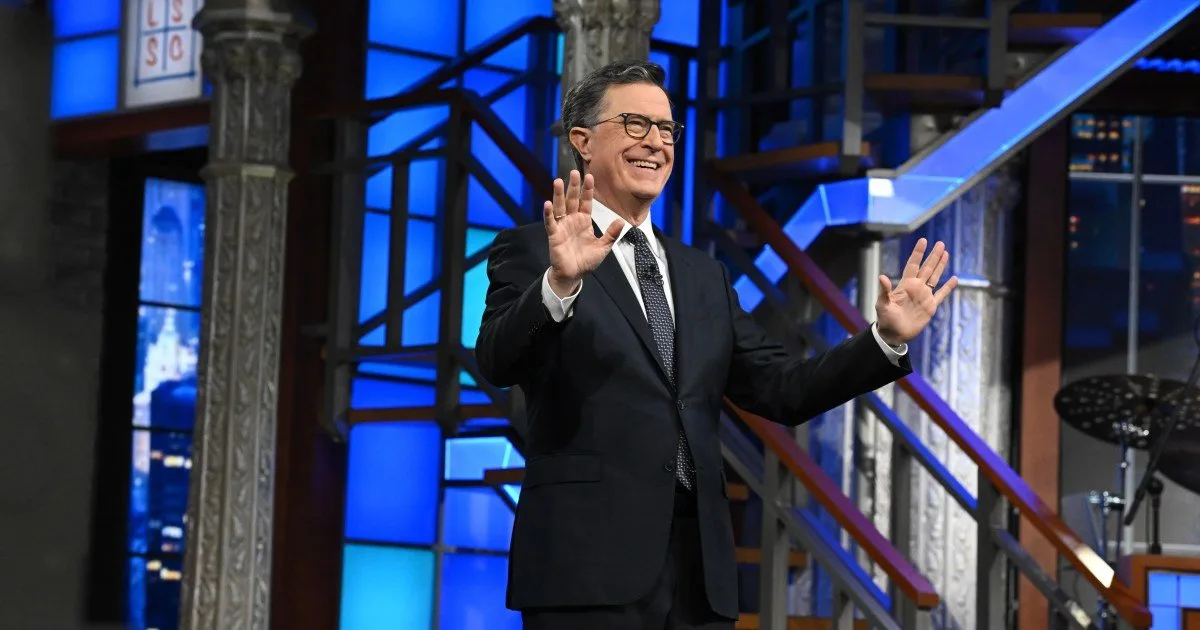
Stephen Colbert called Donald Trump’s handling of the Iran war an improv performance, and the joke landed because he built it from the president’s own words. In a Late Show monologue in early April 2026, Colbert played a clip of Trump describing bombing footage at a Miami investor forum, then answered it with Winston Churchill, one of Trump’s declared heroes. The Stephen Colbert improv war line that closed the segment was, “Yes, this is officially America’s first improv war.”
The conflict Colbert was joking about began on February 28, 2026, when the United States began bombing Iran. This article keeps to what was broadcast and reported about the monologue, and does not repeat casualty figures or battlefield claims, which were not verified in the sources used here. The monologue itself is a matter of public record, and the quotes below come from the segment as reported by OK Magazine on April 3, 2026, and from the Late Show’s own YouTube upload.
What did Trump say in the Miami clip Colbert played?
In the clip from the Miami investor forum, Trump described watching classified footage of a bombing attack in simple, excited terms. “But what happened is, you have to see it. It’s very cool. Missiles launched. Missiles launched. Missiles launching. They’re launching. Okay, we’re ready. Then in 7 seconds, uh, fire, fire, fire. This is the most unbelievable thing. Fire, poom, fire, poom!” Colbert paused, then answered, “Stirring, stirring wartime leadership.” He added, sarcastically, “It reminds me of Winston Churchill.”
The Churchill comparison worked because Trump’s admiration for the wartime prime minister is well documented, including his decision to reinstall a bust of Churchill in the Oval Office at the start of his second term. OK Magazine’s April 3, 2026 report on the monologue sets out the exchange in full, and the Late Show posted the segment to YouTube under the title “Millions March Against Trump’s War and Deportations | Trump’s Improv War | Global Helium Crisis.”
How did Colbert turn Churchill’s speech into a joke?
Colbert took Churchill’s most famous wartime rhetoric and rewrote it in Trump’s vocabulary from the clip. “We should fight them on the beaches, like pew pew pew, ka-chow, blammo! So cool,” he joked, turning a historic speech into a comedic mashup. The joke depends on the audience knowing both halves: Churchill’s 1940 “we shall fight on the beaches” speech, and Trump’s sound effects from the Miami forum. Colbert has hosted The Late Show on CBS since September 8, 2015, and the show airs weeknights at 11:35 p.m. ET from the Ed Sullivan Theater in New York.
The segment did not stop at Churchill. Colbert also criticised what he described as inconsistent messaging from the administration about the war, saying, “We have no sense of whether the war is ending anytime soon,” and that the conflict had taken on “an ‘erratic and make-it-up-as-it goes’ feel.” That sentence is the bridge to the closing line, and it is the part of the monologue that drew the most comment online.
What was the context of the April 1 speech Colbert mocked the next night?
The day before the improv monologue, on April 1, 2026, Trump gave his first national address since the Iran war began, speaking from the White House for about 19 minutes and saying that “core strategic objectives are nearing completion.” Colbert opened his April 1 monologue by jokingly describing that address as “concise, intelligent, and brought the nation together with shared purpose,” then paused and delivered the punchline, “April Fools!” ComingSoon’s April 2, 2026 report on the April Fools monologue notes that Colbert admitted he had not watched the speech, having been filming before it aired, and that the address fell on the first night of Passover.
The two nights together show how Colbert covered the war in that week: the April 1 monologue used the date for a fake praise joke, and the April 2 monologue used Trump’s own description of the bombing footage for the Churchill comparison. Both segments spread widely on social media, and OK Magazine reported that the Churchill bit quickly took off online.
Why did the “improv war” line spread so widely?
It spread because it was short, repeatable and built on a clip people could watch for themselves. “America’s first improv war” works as a headline, a caption and a punchline, and it captured a criticism Colbert had been making for weeks, that the administration’s messaging on Iran kept shifting. Earlier monologues in the same period covered rising gas prices and mixed messages about whether the goal was regime change, and the Late Show’s own YouTube descriptions from that period note that the president had not told the American people why he was bombing Iran and that the US and Israel had sent mixed messages about regime change.
There is also a longer context worth noting. CBS announced in 2025 that The Late Show would end, and coverage since then has treated Colbert’s monologues as part of a final run. That gives the Iran war jokes a sharper edge in the reporting, though the jokes themselves stand on the clips and quotes above. Readers can see how Colbert handled Trump in other recent segments in his seven word question to Trump, his Melania documentary joke about zero tickets sold, and the reaction to his successor after The Late Show ends.
Frequently asked questions
When did Stephen Colbert call it an improv war? In his Late Show monologue in early April 2026, reported by OK Magazine on April 3, 2026.
What did Colbert actually say? “Yes, this is officially America’s first improv war,” after describing the conflict as having an erratic and make-it-up-as-it-goes feel.
When did the Iran war begin? The conflict began on February 28, 2026, and Trump’s first national address about it came on April 1, 2026.