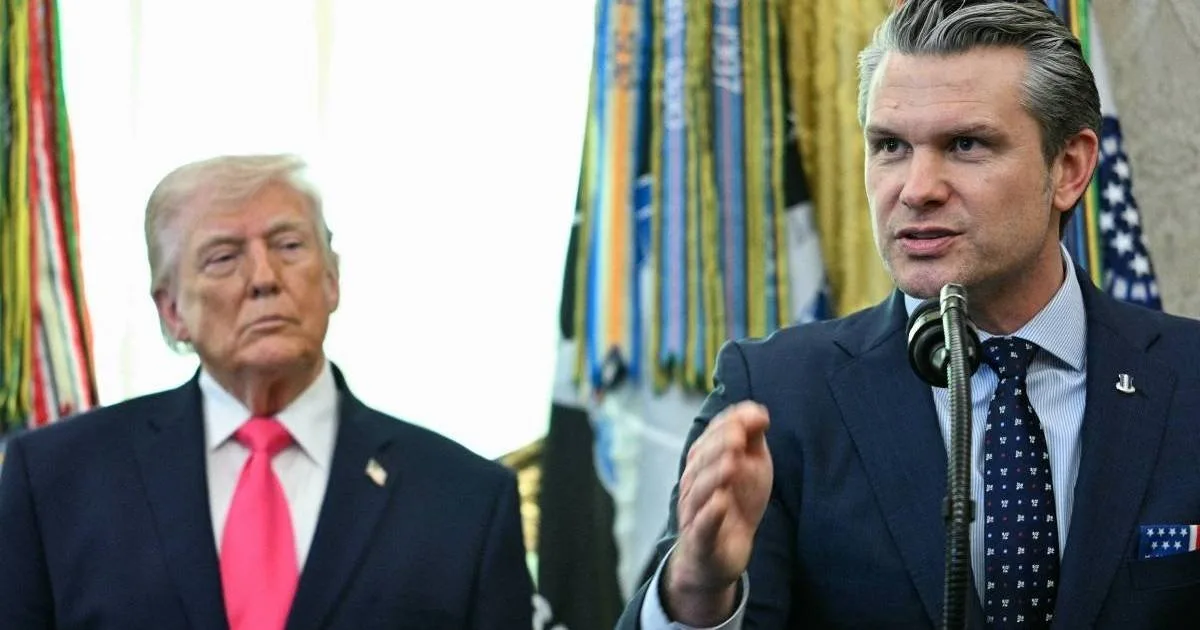
The Hegseth aide Trump remark reported by The New York Times on March 27, 2026, has Defense Secretary Pete Hegseth’s chief of staff, Ricky Buria, at the center of a fight over Army promotions. According to the Times, Buria told Army Secretary Daniel P. Driscoll that President Donald Trump would not want to stand next to a Black female officer at military events. Buria called the account “completely false.” The report also said Hegseth blocked the promotions of four Army officers, two Black and two women, to one-star general. Both claims rest on anonymous officials, and the Pentagon denied them, so this article reports what was alleged and who denied it rather than treating either side as settled fact.
What did the New York Times report about Ricky Buria?
The Times report, written by Greg Jaffe, Eric Schmitt, Helene Cooper, and Adam Entous and based on interviews with 11 current and former military and administration officials, described a heated exchange last summer between Buria and Driscoll. Driscoll had selected Maj. Gen. Antoinette R. Gant, a combat engineer who served in Iraq and Afghanistan, to take command of the Military District of Washington. The command, headquartered at Fort McNair in Washington, provides security and performs ceremonial duties, and its commander often appears alongside the president at Arlington National Cemetery.
According to three current and former defense and administration officials familiar with the exchange, Buria chastised Driscoll for the selection and said Trump would not want to stand next to a Black female officer at military events. Driscoll was shocked, the officials said, and answered, “The president is not a racist or sexist.” People, which covered the Times report the same day, noted that Hegseth’s office ultimately retreated on the issue when Driscoll and a senior White House official disagreed with Buria’s assessment of Trump. Gant formally took command of the Military District of Washington last July.
How did Buria and the Pentagon respond?
Buria disputed the account in a statement to People. “This is completely false. Whoever placed this made up story is clearly trying to sow division among our ranks in the Department and the administration,” he said. Pentagon chief spokesman Sean Parnell brushed off the reporting, saying military promotions under Hegseth are determined solely by merit. He called the Times story “full of fake news from anonymous sources who have no idea what they’re talking about.” The Pentagon did not address questions about Buria’s interaction with Driscoll specifically. Readers should keep that in mind: the remark is alleged by three officials the Times did not name, and Buria denies it outright.
Which four officers did Hegseth block from promotion?
The same Times report said Hegseth blocked the promotion of four Army officers to one-star general, an unusually rare move for a defense secretary. Two of the officers are Black and two are women, on a promotion list of about three dozen names, most of them white men. Hegseth had pressed senior Army leaders, including Driscoll, for months to strike the four names from the list. Driscoll repeatedly refused, citing what the Times called the officers’ decades-long records of exemplary service. Earlier in March, Hegseth unilaterally removed their names, though it is not clear he has the legal authority to do so. The list was being reviewed by the White House, which was expected to send it to the Senate for final approval.
The names of the four officers have not been made public. According to the report, one is a Black armor officer and combat veteran who was targeted over a paper he wrote about 15 years ago about Black military officers. Another is a female logistics officer who was reportedly targeted over her involvement in the chaotic 2021 withdrawal from Afghanistan. It was not immediately clear why Hegseth removed the other two officers. Some senior military officials told the Times they questioned whether the officers were being singled out because of their race or gender, and said the episode was eroding confidence in a promotion system that is supposed to be apolitical and merit based.
The report landed in a week when Hegseth was already under fire from late-night television. Jimmy Kimmel had called out Hegseth over alleged spending of $93 billion, and John Oliver reacted to Hegseth’s CNN comments earlier in the month. The promotion fight is separate from those stories, but it added to a pattern of public clashes between Hegseth and senior military leaders that the Times report traced back months.
What did the original version of this story get wrong?
The original version of this article misspelled the general’s name as “Gantt” throughout. Her name is Maj. Gen. Antoinette R. Gant. It also garbled the sequence of events, suggesting Buria had somehow “informed” Gant’s appointment and that Hegseth had “canceled” promotions after Driscoll refused. What the Times actually reported is that Driscoll selected Gant, Buria objected in a heated exchange last summer, Hegseth’s office later retreated, and Gant took command last July. The four blocked promotions were a separate matter: Hegseth pressed Driscoll for months, Driscoll refused, and Hegseth struck the names himself earlier in March. The New York Times report, published March 27, 2026, is the source for the details above, and Trump’s other military personnel decisions that month drew their own scrutiny.
Frequently asked questions
Who is Maj. Gen. Antoinette R. Gant?
A combat engineer who served in Iraq and Afghanistan. She was selected by Army Secretary Daniel P. Driscoll to command the Military District of Washington, which provides security and ceremonial support in the capital, and she took command in July 2025.
Did Ricky Buria admit to the remark about Trump?
No. Buria called the Times account “completely false” and said whoever spread it was trying to sow division in the department. The allegation comes from three unnamed officials.
Were the four blocked officers named?
No. Their names have not been made public. The Times reported only that two are Black and two are women, and described two of them by background: a Black armor officer and a female logistics officer.